Time:2025-10-28
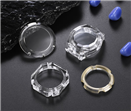
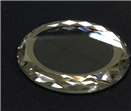
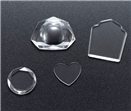
Sapphire lensesThe high thermal stability has become an important research direction in the field of modern optical materials, and its physical properties make it advantageous in harsh environments. From aerospace to industrial laser equipment, from smartphones to precision instruments and meters, sapphire lenses are expanding the performance boundaries of optical components due to their ultra-high melting point (about 2040 ℃) and excellent thermal conductivity.
1. The innate advantages conferred by crystal structure
The corundum structure of sapphire (alpha alumina single crystal) is composed of tightly packed oxygen and aluminum atoms, and this hexagonal crystal arrangement makes it a material with a hardness second only to diamond in nature. The core secret of its thermal stability lies in two points: firstly, the mixed bonding mode of strong covalent and ionic bonds, which requires high energy to destroy the lattice; The second is the low thermal expansion coefficient (5.3 × 10 ⁻⁶/K, from room temperature to 1000 ℃), which is only 1/8 of that of ordinary glass.
2. Breakthrough performance in thermal shock resistance capability
Unlike conventional optical materials that are prone to breakage in sudden cooling and heating environments, sapphire lenses exhibit astonishing thermal shock stability. If a sapphire sheet with a thickness of 1mm is rapidly poured into ice water at 800 ℃, it can withstand more than 200 cycles without breaking. This characteristic stems from its high thermal conductivity of up to 35W/(m · K), which can quickly balance the stress caused by temperature gradients.
3. Optical stability under high temperature environment
When the temperature rises above 1000 ℃, most optical materials will experience problems such as transmittance attenuation and refractive index drift. The transparency of sapphire in the visible to mid infrared wavelength range (0.15-5.5 μ m) is almost unaffected by temperature. At 1500 ℃, the transmittance of sapphire lens in 400-700nm band only decreases by 2.3%, which is far better than the 15% attenuation rate of fused silica.
4. Thermal protection enhancement of surface modification technology
By using plasma enhanced chemical vapor deposition technology to grow aluminum nitride coatings on sapphire surfaces, the upper limit of its operating temperature can be increased to 1900 ℃.
5. Thermal management solutions for industrial applications
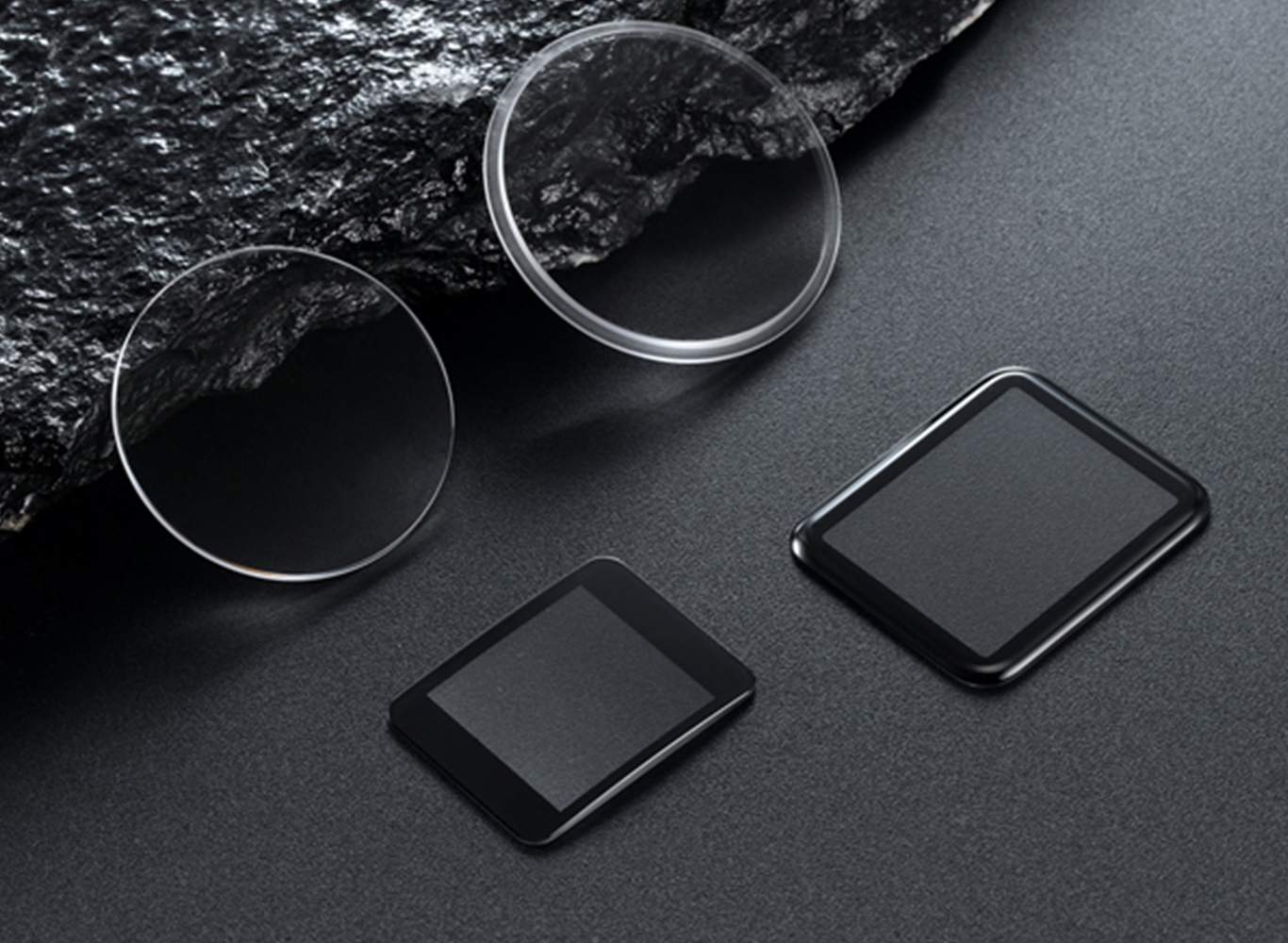
In the field of consumer electronics, the heat resistance is improved to 600 ℃ by optimizing crystal orientation (C-plane growth), while gradient cooling technology has been developed for industrial applications.
From the laboratory to the production line, sapphire lenses are constantly breaking through the physical limits of high-temperature applications. Its unique thermal stability is not only a gift from nature, but also a crystallization of human material engineering wisdom. When other optical materials compromise at high temperatures, sapphire still maintains its crystal clear dignity, which may be an example of the combination of technology and nature.
Tel
Mobile phone
Customer service
TOP