Time:2025-12-25
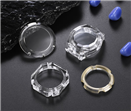
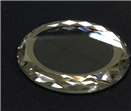
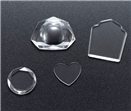
sapphire glassAs a high-performance optical material, it has been widely used in the field of infrared optical windows. Its unique physical and chemical properties make it a key component in infrared optical systems. This article will explore the application of sapphire glass in infrared optical windows, analyze its advantages, characteristics, and application scenarios.
Sapphire glass has high hardness, with a Mohs hardness of up to level 9. This characteristic enables it to withstand wear and impact in extreme environments. In high-speed aircraft, the infrared window needs to withstand the impact of particles such as dust and raindrops in high-speed airflow. Excellent wear resistance can ensure that the optical system maintains clear imaging quality for a long time. At the same time, its compressive strength is over 2GPa, which can withstand high dynamic pressure environments.
In terms of optical performance, sapphire glass has a wide range of transmittance, with good transmittance from ultraviolet to mid infrared. This broad-spectrum transmission characteristic enables it to be compatible with various operating bands of infrared detectors, including shortwave infrared, mid wave infrared, and longwave infrared systems. Especially in the mid wave infrared band of 3-5 μ m, the transmittance can reach over 85%, which is crucial for applications such as thermal imaging. In addition, it has a low coefficient of thermal expansion (about 5.3 × 10 ^ -6/K), which can maintain stable optical performance in environments with drastic temperature changes and reduce optical distortion caused by thermal stress.
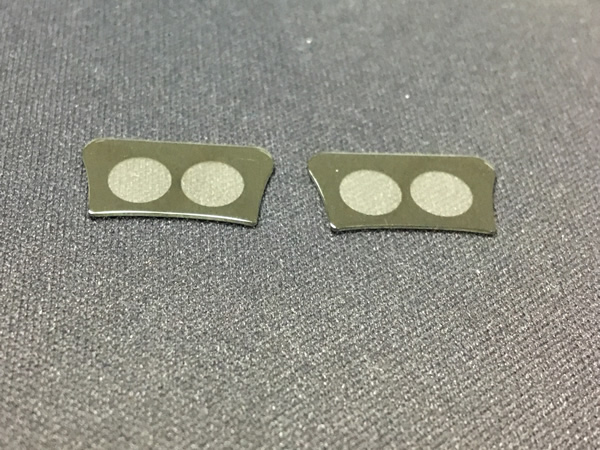
Chemical stability is another major advantage of sapphire glass, as it has strong resistance to most acids, bases, and solvents, and can maintain stable performance even in corrosive environments with high temperature and pressure. This characteristic makes sapphire glass particularly suitable for infrared optical windows in harsh environments such as chemical process monitoring and deep-sea exploration. In marine environments, sapphire windows can resist the corrosion of seawater for a long time; In the field of petrochemicals, it can withstand the erosion of various corrosive gases.
In terms of thermal conductivity, its thermal conductivity is about 25-35W/(m · K). This feature enables it to quickly conduct heat, avoiding performance degradation or damage caused by local overheating. In laser systems, sapphire windows can serve as output windows for high-power lasers, effectively dissipating heat; In high-temperature industrial testing, it can withstand temperatures of several hundred degrees without deformation. Meanwhile, the melting point of sapphire glass is as high as 2053 ℃, allowing it to maintain structural integrity and optical properties in extreme high temperature environments.
In the practical application of infrared optical windows, the processing technology of sapphire glass is also crucial. Through crystal growth technology, large-sized and high optical quality sapphire single crystals can be prepared. The commonly used growth methods include Kjeldahl method, heat exchange method, and guided mode method. These technologies can control crystal orientation, reduce internal defects, and improve optical uniformity. In subsequent processing, precision polishing technology can achieve nanometer level roughness on the surface of sapphire windows, reducing light scattering losses; Special coating techniques can enhance the transmittance of specific wavelength bands or increase surface hardness.
In the civilian field, sapphire infrared windows are widely used in industrial testing, security monitoring, medical equipment, and other areas. On the steel production line, infrared thermal imagers equipped with sapphire windows can monitor the temperature of molten steel in real time; In the power system, it is used for infrared inspection of substation equipment; In the medical field, sapphire windows are used in laser surgical equipment and medical thermal imaging devices. With the development of intelligent driving technology, in car infrared night vision systems have also begun to adopt sapphire windows to improve driving safety.
Sapphire glass has become an important material in the field of infrared optical windows due to its excellent comprehensive performance. From space exploration to daily life, sapphire infrared windows are playing a role. With the advancement of materials science and manufacturing technology, the performance of sapphire infrared windows will be further improved, and their application fields will continue to expand, providing solid support for the development of infrared optical technology.Tel
Mobile phone
Customer service
TOP