Time:2026-01-06
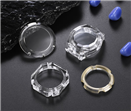
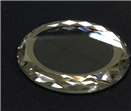
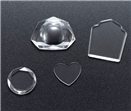
Sapphire, as an excellent optical material, has demonstrated application value in multiple fields due to its unique physical and chemical properties. Its Mohs hardness reaches 9, while possessing excellent optical transmittance, chemical stability, and thermal conductivity, which enable it to meet the requirements of industries such as semiconductor, medical, and aerospace. With the advancement of precision manufacturing technology, sapphireoptical componentThe continuous improvement of machining accuracy and surface quality has laid the foundation for its application in a wider range of fields.
In the field of semiconductor manufacturing, the high hardness and chemical inertness of sapphire optical components have become key advantages. The semiconductor production process requires frequent use of corrosive gases and high-temperature environments, making it difficult for ordinary optical materials to work stably for a long time. Sapphire window plates can withstand the erosion of highly corrosive media such as hydrofluoric acid and maintain long-term stable optical performance in plasma etching equipment. It is worth noting that sapphire has excellent transmittance in the deep ultraviolet band (190-400nm), which is crucial for semiconductor lithography processes. In extreme ultraviolet lithography equipment, sapphire lenses and windows can withstand continuous high-power laser irradiation without significant damage, and their low thermal expansion coefficient (5.3 × 10 ^ -6/K) effectively avoids optical performance degradation caused by thermal deformation. Sapphire prisms and spectrometers in semiconductor testing equipment can ensure measurement accuracy is not affected by environmental temperature fluctuations, providing reliable process control methods for chip manufacturing.
The demand for sapphire components in the medical equipment industry mainly focuses on two aspects: biocompatibility and sterilization tolerance. The sapphire observation window in surgical instruments can withstand high-pressure steam sterilization (135 ℃) and gamma ray disinfection without performance degradation, which is incomparable to ordinary optical glass. In the field of laser medicine, sapphire is the preferred material for the output window of CO2 lasers (wavelength 10.6 μ m), with an infrared transmittance of over 85% and the ability to withstand laser power densities of several hundred watts. The sapphire lens in the endoscope not only provides clear imaging quality, but also has a super smooth surface treatment (Ra<0.5nm) that can effectively prevent biological tissue adhesion and reduce patient discomfort.
The requirements for sapphire optical elements in the industrial laser processing field focus on the power carrying capacity. The thermal conductivity (46W/m · K) of the sapphire focusing mirror of the kilowatt class fiber laser cutting machine is 30 times that of fused silica, which can quickly dissipate heat and avoid the thermal lens effect. The sapphire protective lens in the laser welding head adopts a special coating process to control the reflection loss below 0.1%, significantly improving energy utilization efficiency. The ultrafast laser microfabrication equipment uses sapphire polarizing film, with a damage threshold exceeding 5J/cm ² (100fs pulse), meeting the requirements of precision machining. The sapphire spectral prism in industrial testing equipment utilizes its birefringence characteristic (Δ n=0.008) to achieve accurate control of polarized light and improve measurement resolution.
In the field of scientific research instruments, more attention is paid to the optical performance limits of sapphire. The sapphire monochromator crystal in synchrotron radiation devices utilizes its high diffraction efficiency on the crystal surface to achieve X-ray energy selection. The terahertz spectrometer uses sapphire as the output window, maintaining a transmittance of over 90% in the frequency range of 0.1-10THz. The sapphire observation window of the low-temperature experimental device maintains a high level of thermal conductivity at 4K temperature, providing an optical pathway for low-temperature measurement. The sapphire resonant cavity in quantum optics experiments has a Q value of up to 10 ^ 8, providing an ideal environment for photon state manipulation.
With the advancement of materials science and precision manufacturing technology, sapphire optical components are developing towards multifunctional integration. By modifying the surface of nanostructures, additional functions such as self-cleaning and anti fogging can be achieved; Sapphire composite devices prepared by heteroepitaxial technology integrate optical and electrical functions.Tel
Mobile phone
Customer service
TOP