Time:2026-01-06
Sapphire high and low temperature resistant glass, as a high-performance material, has demonstrated value in industrial production equipment. Its unique physical and chemical properties enable it to maintain stable performance even in harsh temperature environments, providing reliable material support for industrial manufacturing. From semiconductor manufacturing to aerospace, the application of sapphire glass is constantly expanding, driving progress in industrial technology.
In high-temperature environments, ordinary glass often softens, deforms, or even fractures, while sapphire glass can maintain excellent mechanical strength and optical properties. This material can withstand instantaneous high temperatures up to 2000 ℃, and long-term operating temperatures can also reach around 1800 ℃. Sapphire glass is widely used in key areas such as observation windows and temperature measurement windows in high-temperature industries such as steel smelting and glass manufacturing. For example, in the steelmaking process, operators need to monitor the situation inside the furnace in real time through observation windows. Sapphire glass can maintain a clear view for a long time to ensure production safety.
Low temperature environments also test the performance of materials. Under extremely low temperature conditions such as liquid nitrogen (-196 ℃) and liquid oxygen (-183 ℃), most materials become brittle and fragile. Sapphire glass exhibits low temperature resistance, with a low coefficient of thermal expansion that makes it less prone to stress cracking during sudden temperature changes. This characteristic makes it an ideal choice for fields such as low-temperature storage tanks and superconducting equipment.
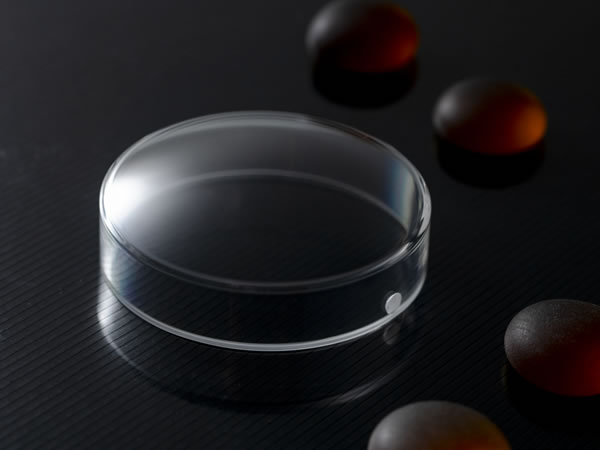
In addition to temperature resistance, sapphire glass also has excellent mechanical strength. Its Mohs hardness reaches level 9, which extends the service life of equipment in industrial production. For example, in the semiconductor manufacturing process, the observation window of the wafer transfer system needs to withstand frequent mechanical friction. Ordinary glass will quickly develop scratches that affect the observation effect, while sapphire glass can maintain a smooth surface for a long time.
Optical performance is another major advantage of sapphire glass, with excellent transparency in the ultraviolet to infrared wavelength range (0.15-5.5 μ m), with a transmittance of over 85%. This characteristic makes it a material for optical devices. In laser processing equipment, sapphire glass is used as the laser output window, which can withstand long-term high-power laser irradiation without fogging or deformation. In the infrared temperature measurement system, the accuracy of temperature measurement is ensured. Especially in semiconductor lithography processes, the uniformity and stability of sapphire glass directly affect the accuracy of chip manufacturing.
Chemical stability enables sapphire glass to adapt to various harsh industrial environments, with strong resistance to most acid, alkali, and salt solutions, and will not be corroded or deteriorated. In chemical production, key components such as observation windows for reaction vessels and sight glasses for pipelines are widely made of high and low temperature resistant glass. The service life can be extended by 3-5 times in strong acid environments, which not only improves equipment reliability but also reduces the risk of production accidents caused by material failure.
In the field of semiconductor manufacturing, the value of sapphire glass is particularly prominent. Many processes in wafer processing require high demands on observation window materials due to the need for vacuum or special gas environments. Sapphire glass can not only withstand pressure differences in a vacuum environment, but also effectively block the penetration of harmful gases. In processes such as ion implantation and plasma etching, sapphire observation windows ensure the accuracy of process monitoring while protecting external optical components from contamination by process gases.
Sapphire high and low temperature resistant glass has become a key material in industrial production equipment due to its temperature resistance, mechanical strength, optical properties, and chemical stability. With the advancement of manufacturing technology and the accumulation of application experience, its value will be more fully reflected, providing a solid material foundation for the innovative development of industrial technology.Tel
Mobile phone
Customer service
TOP