Time:2025-09-18
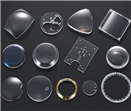
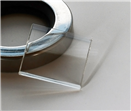
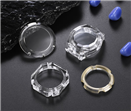
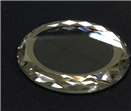
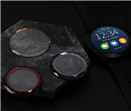
Sapphire window panelAs a high-performance optical component, it is widely used due to its excellent physical and chemical properties. The quality of its coating process directly affects the performance of the optical system, so studying the coating technology of sapphire window panels has important engineering application value.
1、 Basic Characteristics of Sapphire Window Plates
Sapphire (α - Al ₂ O3) has a unique crystal structure, with a Mohs hardness of up to level 9. This material has excellent transparency in the 0.15-5.5 μ m wavelength range, with a transmittance of over 85%. At the same time, sapphire also has excellent chemical stability and can withstand the corrosion of strong acids and alkalis, with a melting point of up to 2050 ℃. These characteristics make it an ideal optical window material for extreme environments. However, the high hardness of sapphire also poses challenges for subsequent processing, especially in surface treatment processes that require special technical means.
2、 Substrate processing technology before coating
Substrate processing is a fundamental step in the coating process, which directly affects the adhesion of the film layer. Firstly, precision polishing is required to control the surface roughness below 0.5nm. After multi-stage polishing using diamond grinding solution, ion beam cleaning technology is required to remove surface contaminants. Using argon ion bombardment for 5-10 minutes in a vacuum environment can effectively remove the surface adsorption layer. Subsequently, ultrasonic cleaning is required, using acetone, ethanol, and deionized water for 15 minutes each to ensure that the surface reaches atomic level cleanliness.

3、 Comparison of Main Coating Technologies
1. Electron beam evaporation coating: This is a traditional coating method that deposits evaporated material on the surface of a substrate by heating it in a vacuum environment. This method has simple equipment and is suitable for preparing single-layer anti reflection films. However, the density of the film layer is relatively low and usually requires subsequent annealing treatment.
2. Ion assisted deposition (IAD): Introducing ion beam bombardment during the evaporation process can significantly increase the membrane density. The use of 40-80eV argon ion assisted deposition can increase the refractive index and hardness of MgF ₂ film layer.
3. Magnetron sputtering coating: This technology uses plasma to bombard the target material to sputter atoms and deposit them into a film, suitable for preparing metal films and complex multilayer film systems. Reactive magnetron sputtering technology can prepare high-quality oxide thin films at low temperatures.
4. Atomic layer deposition (ALD): This is a self limiting surface chemical reaction process that can achieve atomic level precision in film thickness control. Suitable for preparing ultra-thin protective films, but the deposition rate is slow and the cost is high.
4、 Typical membrane system design and application
1. Broadband anti reflection film: adopts TiO ₂/SiO ₂ alternating multilayer structure, designed to cover the visible light range of 400-700nm. By optimizing the film thickness ratio, the average reflectivity can be reduced to below 0.5%.
2. High damage threshold film: For high-power laser applications, HfO ₂/Al ₂ O ³ alternating film layers are used. By accurately controlling the crystallization process, the laser damage threshold can reach 15J/cm ² (1064nm, 10ns).
3. Environmental resistant film: Add a layer of DLC (diamond-like carbon) protective film with a thickness of about 20nm on top of the conventional anti reflection film. This composite film system can maintain stable performance for more than 1000 hours in salt spray tests.
5、 Quality control of coating process
The stability of membrane performance depends on strict process control. Firstly, real-time monitoring of membrane thickness is required, and the commonly used quartz crystal monitoring accuracy needs to reach ± 0.3nm. Secondly, the substrate temperature needs to be controlled, usually maintained within the range of 200-300 ℃ to obtain a suitable membrane structure. For multilayer film systems, special attention should be paid to the issue of interlayer stress matching.
6、 Performance testing and evaluation
1. Optical performance testing: Measure the transmittance and reflectance spectra using a spectrophotometer, with a deviation of no more than 1% from the design values.
2. Environmental reliability testing: including high temperature and high humidity test (85 ℃/85% RH, 1000 hours), thermal shock test (-40 ℃~85 ℃, 50 cycles), etc.
3. Mechanical strength testing: Scratch method is used to test adhesion, and the critical load should be greater than 30N; friction testing machine is used to test wear resistance, and it is required that the film layer has no obvious damage after 1000 frictions.
With the advancement of technology, the coating process of sapphire window panels is developing towards higher performance and intelligence. In fields such as quantum communication and extreme ultraviolet lithography, higher requirements will be placed on coating technology, which requires collaborative innovation in materials, optics, and processes. It is worth noting that process optimization not only needs to consider technical indicators, but also needs to balance costs and production capacity, which is particularly crucial for industrial applications.
Tel
Mobile phone
Customer service
TOP