Time:2026-03-03
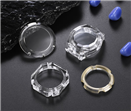
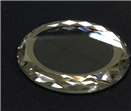
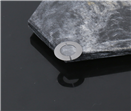
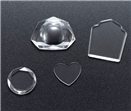
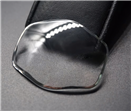
Sapphire watch mirrorAs one of the core components of a wristwatch, its processing technology directly determines the quality and aesthetic value of the product. From traditional flat circular shapes to complex irregular cutting, sapphire mirrors of different shapes face vastly different technical challenges during the processing. This article will explore the differences in processing flow, technical difficulties, and process innovation among circular, square, barrel shaped, and irregular curved mirrors.
1. Circular watch mirror
As a common design, the processing of circular sapphire watch mirrors has formed a standardized process. After cutting the cylindrical blank with a diamond wire saw, rough grinding is carried out using a CNC machine, and the machining accuracy needs to be controlled within ± 0.05 millimeters. The technical difficulty lies in the surface polishing stage - in order to achieve the mirror effect required for sapphire with a Mohs hardness of 9, diamond particle grinding paste needs to be used in conjunction with a specially designed copper disc to perform fine polishing at a speed of 3000 revolutions per minute for up to 72 hours. The chamfering treatment of circular watch mirrors is particularly critical, and the cutting angle error of the 45 degree oblique edge needs to be less than 0.5 degrees, otherwise it will cause stress cracks during the assembly of the metal bezel.

2. Square mirror
Compared to the uniform stress distribution of a circle, the right angled structure of a square mirror increases its processing complexity geometrically. The polishing of right angle parts requires a specially designed diamond grinding head for three-dimensional polishing, and each corner needs to go through 20 different particle size grinding processes.
3. Wine barrel shaped mirror
The barrel shaped mirror displays the processing of asymmetric surfaces, and its unique saddle shaped surface requires a five axis linkage machine tool to simultaneously control X/Y/Z three-axis linear motion and A/C axis rotational motion, with a programming path of over 1200 coordinate points. The progressive polishing method divides the entire surface into 128 micro zones, and adjusts the polishing pressure and angle separately for each zone to achieve a continuous transition with a curvature radius of 0.05 millimeters.
4. Special curved surface mirror
The 3D composite surface machining integrates optical lens manufacturing technology, using an ultra precision flying knife cutting system for nanoscale turning with a feed rate of 0.1 microns. The surface roughness can reach Ra0.001 μ m. Such mirrors often require real-time feedback systems with 3D laser scanning.
The evolution history of sapphire crystal mirrors from traditional circles to breakthrough three-dimensional surfaces is actually a change in precision machining technology. Behind each special shape, there is a systematic breakthrough in materials science, mechanical engineering, and optical technology. These subtle differences in craftsmanship hidden between the square inches have created a completely different aesthetic language and performance benchmark for wristwatches.Tel
Mobile phone
Customer service
TOP