Time:2026-03-03
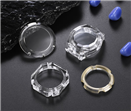
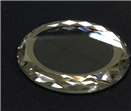
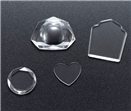
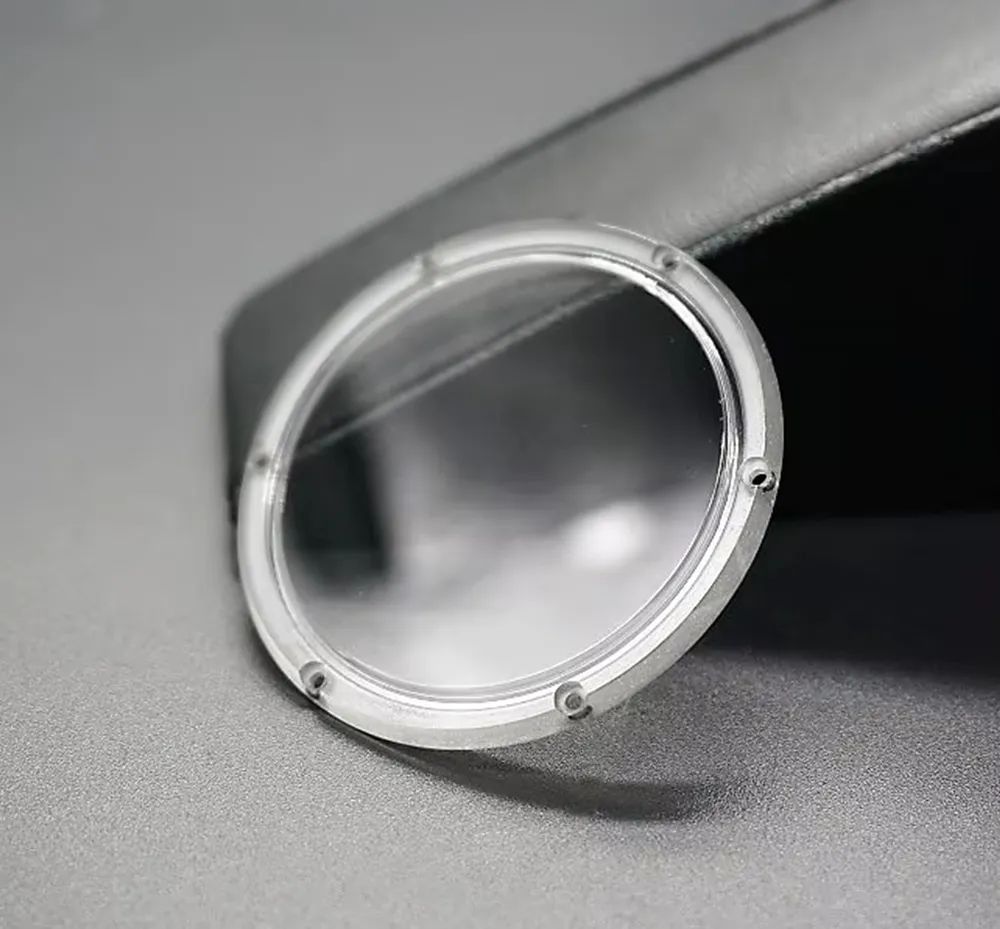
Sapphire lenses are widely used in optical instruments, smartphone cameras, smartwatches, and other fields due to their excellent hardness, wear resistance, and optical properties. However, the high hardness of sapphire also makes its processing difficult, especially the surface milling process, which directly affects the final accuracy and optical performance of the lens. The following are the mainstream sapphire lens surface milling methods and their technical points in the industry.
1、 Traditional mechanical milling method
Traditional mechanical milling mainly uses diamond cutting tools or cubic boron nitride cutting tools for processing, and the core of this method lies in tool parameter optimization and cooling system design:
1. Tool selection: The cutting edge of diamond tools should maintain nanometer level sharpness, and the rake angle is usually designed to be -25 ° to -30 ° to reduce cutting resistance;
2. Cutting parameters: The spindle speed should reach 20000-30000 rpm, the feed rate should be controlled at 0.5-2 mm/min, and the single cutting depth should not exceed 0.01 mm;
3. Coolant: High pressure spray cooling (such as oil-based coolant) can effectively reduce the cutting temperature and prevent the sapphire lens from microcracking due to thermal stress.
However, the limitations of mechanical milling are obvious: low processing efficiency (about 30 minutes per piece), and the surface roughness is difficult to exceed Ra 0.05 μ m.
2、 Laser milling technology
Laser processing has become a new direction for sapphire precision processing due to its non-contact characteristics, and femtosecond laser (wavelength 1030 nm, pulse width<500 fs) is the mainstream choice:
1. Processing principle: Ultra short pulse laser directly vaporizes materials through multiphoton absorption effect, and the heat affected zone can be controlled within 1 μ m;
2. Path planning: The spiral scanning path, combined with a 0.1 mm overlap rate, can achieve a surface roughness Ra of 0.02 μ m;
3、 Chemical Mechanical Polishing (CMP)
CMP technology is indispensable for the sub nanometer level smoothness requirements of sapphire lens surfaces.
1. Polishing solution formula: silica colloid (particle size 50 nm), sodium hydroxide (pH 10-11), oxidant (such as ammonium persulfate), material removal rate of about 0.3 μ m/min;
2. Process synergy: First, mechanical milling is used to achieve Ra 0.1 μ m, and then CMP treatment is performed for 30 minutes to obtain a super smooth surface with Ra<0.5 nm;
4、 Ion Beam Milling (IBF) Technology
Ion beam milling achieves atomic level material removal through argon ion bombardment, especially suitable for complex surface machining such as non spherical surfaces
1. Numerical control: ion energy of 300-500 eV, beam density of 1-2 mA/cm ², removal rate of about 5 nm/min;
2. Advantages: No tool wear, surface accuracy can reach λ/20 (λ=632.8 nm);
The selection of sapphire lens milling technology needs to balance cost, accuracy, and efficiency, and mechanical laser composite processing has become the mainstream solution in the field of consumer electronics. With the popularization of third-generation semiconductor materials, process innovation in this field will continue to break through its limits.Tel
Mobile phone
Customer service
TOP