Time:2026-02-26
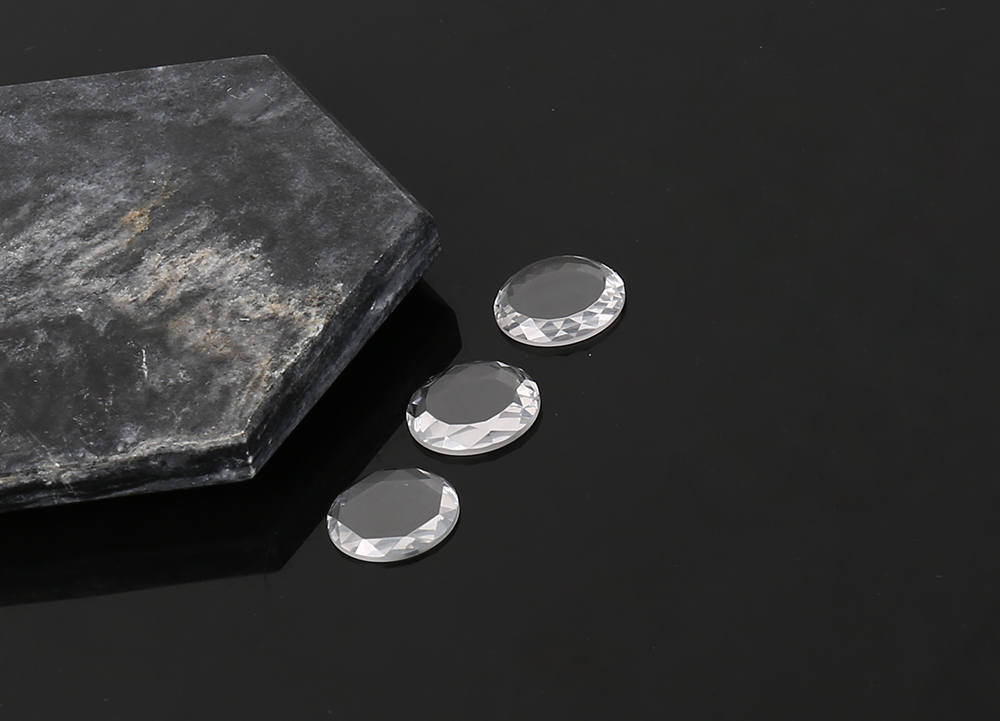
Sapphire, as one of the current wear-resistant optical materials, its high hardness makes it an ideal choice for watches, smartphone camera lenses, and special optical instruments. However, it is precisely this harsh hardness characteristic that makes the precision machining of sapphire lenses a challenging process. This article will analyze the precision machining forms and key technical points of sapphire lenses.
1、 Raw material selection and pretreatment
The quality of sapphire crystal directly affects the optical performance of the product. Currently, the industry mainly uses the bubble growth method and heat exchange method to grow sapphire crystal ingots. High quality ingots must meet the following standards: no obvious bubbles, cracks, or impurities, and accurate crystal orientation (usually cut using C-plane or R-plane). Before entering precision machining, the ingot needs to undergo orientation, cutting, and rough grinding processes to form a rough workpiece that is close to the shape of the finished product. It is worth noting that there are significant differences in the thickness requirements for raw materials in different application fields - smartphone camera lenses are usually 0.3-0.5mm, while watch mirrors need to reach 1.0-1.5mm.
2、 Precision Grinding Technology
Grinding is a key process that determines the surface quality of lenses. Due to the high hardness of sapphire, traditional grinding techniques are inefficient. Modern processing uses diamond micro powder grinding fluid combined with cast iron grinding discs, with particle size gradually transitioning from W40 to W1.5, completed in 6-8 stages. Ultrasonic assisted grinding generates micro impacts on abrasive particles through high-frequency vibrations of 20-40kHz, increasing material removal rate by more than 30%, while surface roughness can be controlled within Ra0.02 μ m.
3、 Ultra precision polishing process
The polishing stage determines the optical performance of the lens, and chemical mechanical polishing is currently the mainstream solution, with the core being the optimization of the polishing solution formula. A typical formula includes: nanoscale alumina or silica abrasives (particle size 30-50nm), pH regulators (maintaining an alkaline environment of 9.5-10.5), and surfactants. Temperature control is particularly critical and needs to be maintained within the range of 25 ± 0.5 ℃ to avoid microcracks caused by thermal stress.
4、 Special surface treatment technology
To meet the needs of different application scenarios, sapphire lenses also need to undergo various functional treatments:
1. Anti reflective coating
Using ion beam sputtering to deposit 7-9 layers of MgF2/TiO2 alternating film system, the visible light transmittance is increased from 85% to 99.2%
2. Oil repellent coating
Perfluoropolyether thin film is formed by plasma enhanced chemical vapor deposition, with a water contact angle of up to 115 °
3. Anti glare treatment
Use reactive ion etching to form nanoscale concave convex structures on the surface, with haze controlled within the range of 5-8%
5、 Quality Inspection System
The complete detection process includes three levels:
1. Geometric dimension inspection
Measure thickness tolerance (± 0.01mm) and parallelism (≤ 1 ′) using a white light interferometer
2. Surface defect detection
The automatic detection system based on machine vision can recognize scratches and dents ≥ 0.5 μ m
3. Optical performance testing
Including interferometer surface shape detection, spectrophotometer transmittance testing, and environmental reliability testing (500 hour aging test under 85 ℃/85% RH conditions)
With the increasing demand for sapphire lenses in the consumer electronics market, processing technology is developing towards ultra precision, intelligence, and green manufacturing. From micrometer level cutting to atomic level polishing, sapphire lens precision machining can be regarded as the pinnacle of manufacturing technology. This process integrates materials science, precision machinery, and intelligent algorithms.Tel
Mobile phone
Customer service
TOP