Time:2025-11-06
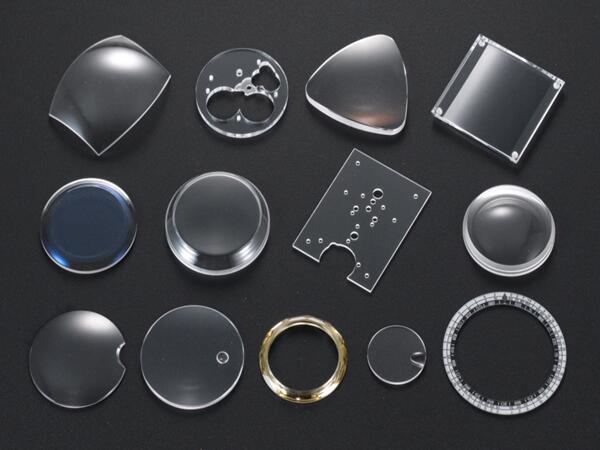
Sapphire glass, as a high-performance optical material, exhibits unique advantages in the field of detector protective windows. Its physical and chemical properties make it an ideal choice for protecting precision detectors in harsh environments. This article will explore the technical characteristics of sapphire glass in the application of detector protective windows.
The high hardness of sapphire glass enables it to effectively resist the wear and tear of wind, dust, and small particles. Detectors working in harsh environments such as deserts, polar regions, or industrial areas often face high-speed impacts from particles on their protective windows. Ordinary glass will quickly become blurry under these conditions, seriously affecting detection accuracy. Sapphire glass can maintain surface smoothness for a long time, ensuring the accuracy of detection data.
In the field of infrared detection, it exhibits excellent transparency performance. It has a transmittance of over 85% in the 0.15-5.5 micron wavelength range, making it an ideal window material for devices such as infrared thermal imagers and laser rangefinders. Especially for infrared detection systems that require stable operation in complex environments, sapphire glass not only provides excellent optical performance but also resists environmental damage.
Chemical stability is another major advantage, as it can resist the erosion of most acids, bases, and solvents, and performs outstandingly in corrosive environments such as chemical engineering and marine environments. The detection equipment of offshore oil platforms is often exposed to high salinity and high humidity air, and ordinary glass will gradually corrode, while sapphire glass can maintain long-term stability.
The high temperature resistance of sapphire glass makes it shine in the aerospace field. It can withstand instantaneous high temperatures up to 2000 ℃, with a melting point of 2053 ℃. This characteristic makes it a material of choice for rocket engine monitoring, spacecraft re-entry into the atmosphere, and other temperature environments.
In terms of mechanical strength, sapphire glass has a bending strength of over 400MPa, which enables it to withstand mechanical stresses such as high pressure and vibration. In the field of deep-sea exploration, the observation window of submarines needs to withstand enormous water pressure, and sapphire glass is chosen for its mechanical properties.
With the rapid development of industrial testing, environmental monitoring and other fields, the demand for high-performance detectors continues to grow. The application of sapphire glass protective windows in semiconductor manufacturing equipment, laser processing machinery, nuclear power plant monitoring systems, and other scenarios is constantly expanding. Especially in the battery detection system of new energy vehicles, sapphire windows can withstand the high temperature impact of battery thermal runaway, providing reliable protection for safety monitoring. Meanwhile, the introduction of intelligent manufacturing technology will further enhance production efficiency and product consistency.Tel
Mobile phone
Customer service
TOP