

Time:2026-01-26
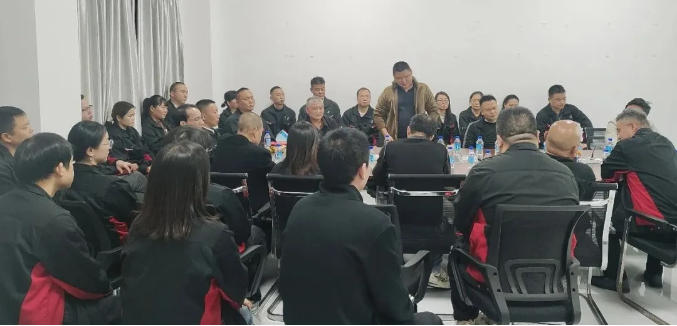
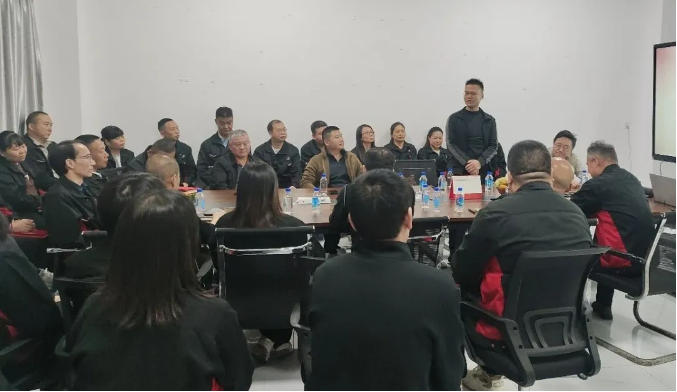
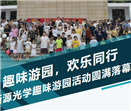
On January 15, 2026, the graduation ceremony of the grassroots management training course was held grandly. The company's general manager, deputy general manager, department managers, and all trainees gathered together to witness this important moment.
This grassroots management training course lasted for four months, with a curriculum closely tailored to the actual needs of the enterprise, covering multiple core modules such as team building, teamwork, waste management, IE seven methods, 5S management, PDCA cycle, fishbone diagram analysis, pre shift meeting management, safety production, effective communication skills, and management skill improvement. By combining theoretical learning with practical exercises, comprehensively enhance the professional competence and management ability of grassroots managers.

Learn to apply, integrate knowledge with action
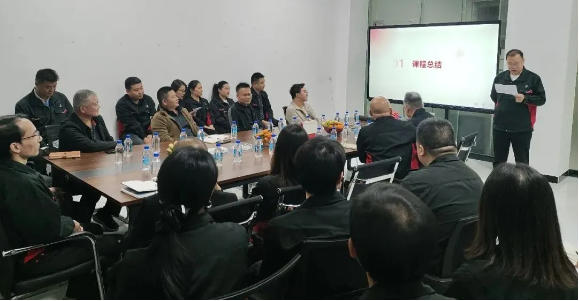
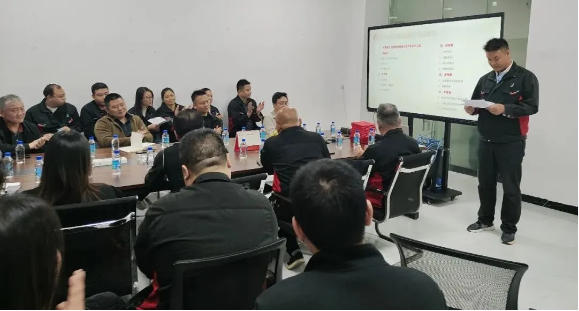
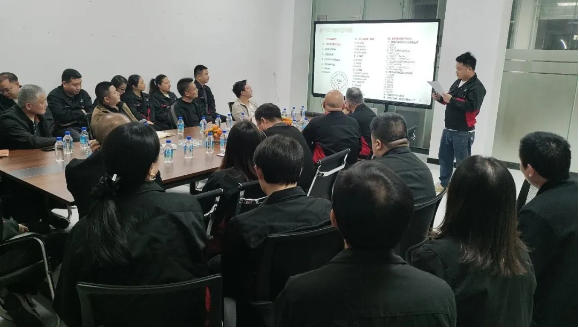
At the beginning of the ceremony, students from the production line took the stage one by one, sharing their learning experiences and application results based on their respective job positions. Wei Rongwang from the CNC Production Department shared the four core skills of management and practical daily management, advocating that management personnel should be the "coaches" of the team. They should not only know how to use management methods themselves, but also teach team members, lead the entire team to master scientific work methods, and create a team culture of continuous learning and improvement. He Lei from the Material Preparation Department shared communication skills and strategies for addressing management issues, as well as how to conduct pre shift meetings effectively. He also provided examples of how he managed the safety of team members through pre shift meetings. Liu Shuicheng from the Alien Department shared how to use PDCA continuous improvement and fishbone diagram to sort out problems; Lu Xiaoxian from the Quality Department shared the seven major waste control measures and the application of IE's seven major techniques, and applied these techniques to his work; PMC department's Guo Shaona shared the three board axe, 5S management, and three-level safety education to improve production efficiency, while the graphic department's Huang Yongxiong shared five obstacle models for overcoming team collaboration and new ideas for managing employees, as well as team system construction and implementation strategies. The students all expressed that through this training, they not only mastered advanced management tools and methods, but more importantly, established systematic management thinking.
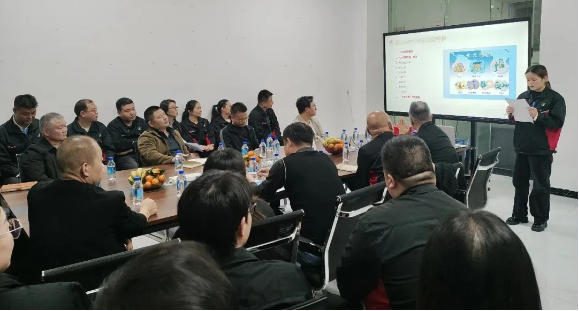
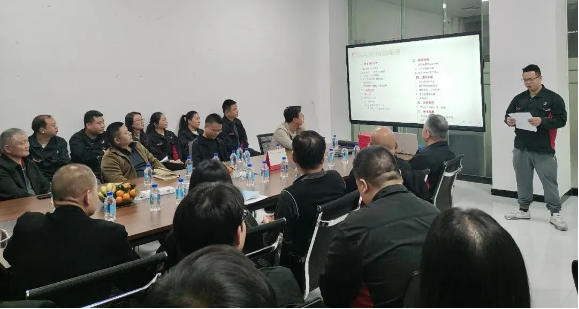
Consolidate the foundation and create a better future together
General Manager Wang fully affirmed the learning achievements of the students in his speech, pointing out that focusing on studying these courses is itself a sense of responsibility. It is understood that during the learning process, everyone had debates, thoughts, and exercises, and also put forward many good questions based on the actual situation of their own team. This kind of learning that connects "classroom" and "on-site" is the most effective learning.
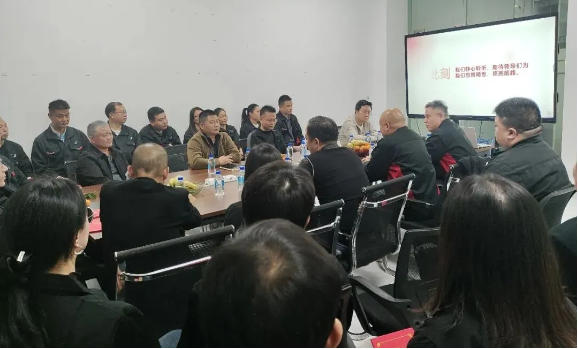
Vice General Manager Jiang also delivered an important speech, emphasizing that managers should be the "core contributors" to management innovation vitality. Grassroots managers are at the forefront of value creation, and have the most direct and sensitive perception of process bottlenecks, management pain points, and improvement highlights. The company encourages everyone to have the courage to express different opinions and try new methods. The "small innovations" and "golden ideas" summarized in practice are the most valuable source of innovation in company management.
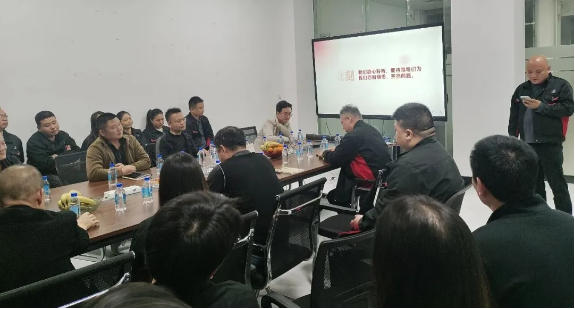
Department managers also spoke separately, expressing their earnest expectations for the students and expressing their full support for improving grassroots management work.
Commending the advanced and inspiring progress
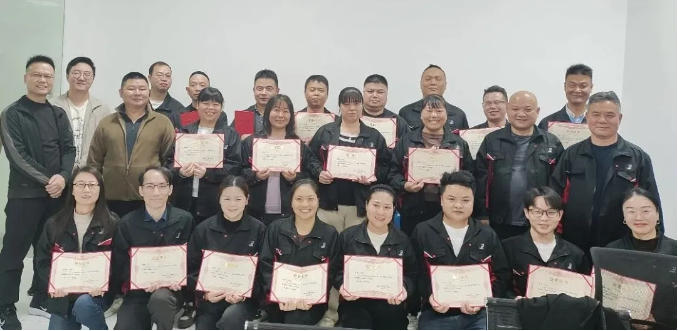
A grand award ceremony was held at the ceremony. The company leaders awarded graduation certificates to 20 students who passed the assessment and recognized their excellent performance during the training period. At the same time, two "outstanding students" and two "progressive stars" will be selected to recognize their outstanding performance and significant progress in the learning process.
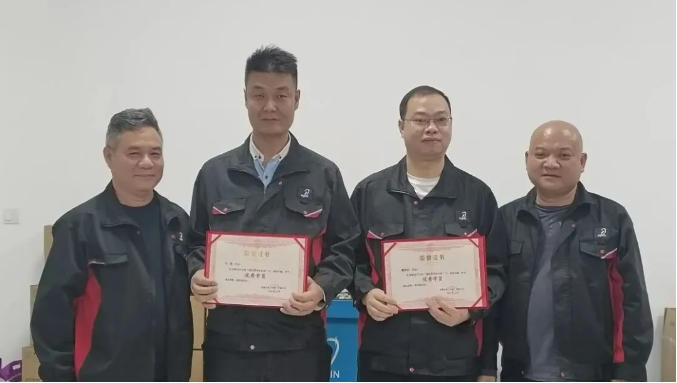
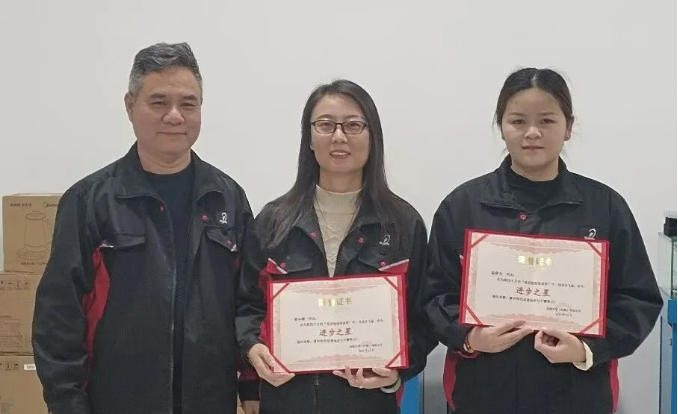
To enhance the effectiveness of training incentives, the company has innovatively launched a training point redemption system. The students earned points through course learning, homework completion, and practical application, and exchanged them for a variety of gifts at the ceremony. It is worth mentioning that Vice President Jiang personally sponsored additional gifts and presented special rewards to outstanding students, reflecting the company's management's high emphasis on talent cultivation.
Continuous learning, constantly surpassing
The successful holding of this grassroots management training course not only enhances the overall quality of the company's grassroots management team, but also injects new vitality into the sustainable development of the enterprise. With full rewards and new missions, the students will return to their respective work positions to transform the knowledge they have learned into a powerful driving force for the development of the enterprise.
The company will continue to adhere to the concept of "people-oriented", build a more comprehensive training system, provide a broader platform for employee growth, and jointly write a new chapter in the development of the enterprise.
#Attachment: Employee Training Experience
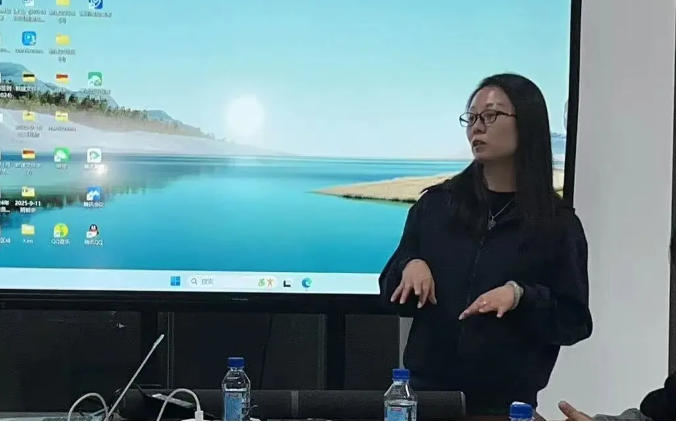
PMC Department Guo Shaona
Time flies, and the 4-month team leader training course has come to a successful end. This training focuses on various aspects of team leader management, with rich and practical content covering multiple dimensions such as communication skills, team management, production management, safety management, and self-improvement. It provides me with comprehensive and systematic knowledge and methods to enhance my overall management abilities.
1、 Review course content
1. Communication and Team Management
The course emphasizes the importance of communication in team management and provides detailed explanations on how team leaders can effectively communicate, which is the foundation for building a good team atmosphere and ensuring smooth information transmission. At the same time, for pre shift meetings in manufacturing enterprises, a method of holding efficient pre shift meetings is provided, which helps to clarify work goals and requirements in a short period of time. In terms of team management, in-depth analysis was conducted on the problems existing in team management, and coping strategies and skills were provided. Four core skills of TWI line supervisors were also introduced to help team leaders improve their leadership abilities. In addition, exploring the five obstacles to overcoming team collaboration provides direction for building high-performance teams. The new ideas of team building and on-site management of new employees provide guidance for the sustainable development of teams from a long-term perspective, emphasizing system construction and implementation strategies to ensure the effective implementation of various management measures.
2. Analysis tools and methods
The course introduces practical analytical tools and methods. The PDCA cycle work method, as a classic management tool, can help team leaders achieve continuous improvement in their work; The clever use of fishbone diagrams provides clear ideas for problem analysis and helps identify the root cause of the problem. The daily management of the team leader is pragmatic and adheres to the 5S principle. Through organizing, rectifying, cleaning, and cultivating skills, the team leader improves the level of on-site management and creates a clean and orderly working environment.
3. Production and Safety Management
In terms of production management, the course focuses on improving production efficiency. Introduced the seven waste control methods of lean production, helping enterprises reduce unnecessary resource consumption; Seven Methods - Improving Efficiency and Three Axes to Help You Quickly Increase Production Efficiency, Providing Specific Operating Techniques for Improving Production Efficiency. Safety production is the bottom line of enterprise development, and the three-level safety education for new employees ensures that they have basic safety awareness and knowledge, laying the foundation for safety production.
4. Self improvement
The course also focuses on the self-improvement of team leaders, introducing five tools to help managers enhance their abilities, encouraging team leaders to continuously learn and grow to adapt to the increasingly complex management needs.
This course training provided the team leader with comprehensive management knowledge and skills, covering all aspects of the team leader's work, from communication and collaboration to on-site management, from problem analysis to efficiency improvement, from safety production to self growth. By learning and applying these knowledge and methods, team leaders can better cope with challenges in their work and improve the overall performance of the team.
2、 Self growth and progress
Looking back, I have had many shortcomings in team management, such as poor communication, weak team management skills, and a lack of effective problem analysis methods, which often troubled me. After this training, I have made significant progress in the following areas:
1. Improvement of communication skills
Now, I am able to communicate more actively with team members, listen to their opinions and suggestions, and create a good team atmosphere. Information transmission is smoother and work coordination is more efficient.
2. Enhance team management skills
Learned how to divide labor reasonably and motivate employees, able to arrange suitable work according to the characteristics of members, and improved the cohesion and combat effectiveness of the team. At the same time, it can promptly identify and resolve issues within the team, avoiding the escalation of conflicts.
3. Improvement in problem analysis and problem-solving skills
Having mastered analysis tools such as PDCA cycle and fishbone diagram, I am able to analyze problems more systematically, identify the key issues, and take effective solutions.
3、 New Year's Plan and Future Outlook
As the New Year approaches and I bid farewell to the old and welcome the new, I am filled with anticipation for the future. I will take this training as an opportunity to continuously consolidate and apply the knowledge I have learned, and further improve my management level. Here are my New Year's plans:
1. Optimize communication mechanism: Establish more comprehensive communication channels to ensure timely and accurate transmission of shipment information within the team and across departments. Organize weekly shipping communication meetings to promptly resolve any issues that arise.
2. Implement 5S management: Fully implement 5S management at the shipping site, organize and rectify the shipping area, clean the working environment, form standardized literacy and good safety awareness, and improve the work efficiency and safety of the shipping site.
3. Import data analysis: Use the analysis tools learned to conduct regular analysis of finished product shipment data, identify key factors that affect shipment efficiency and quality, and develop targeted improvement measures.
4. Strengthen team training: Organize team members to receive knowledge and skills training, share the training content, and jointly improve the level of finished product shipment management.
5. Promote lean production: Integrate the lean production concept into the entire process of finished product shipping management, continuously eliminate the seven major wastes, optimize the shipping process, and improve shipping efficiency and quality.
6. Improve institutional construction: Establish and improve the management system for finished product shipment, ensure that all work has rules to follow, and improve the standardization and standardization level of management.
In the new year, I will continuously improve my ability to manage finished product shipments with a positive attitude and solid actions. In my future work, I will keep in mind what I have learned from training, constantly reflect on and improve my work methods, and strive to achieve efficient, safe, and sustainable development of finished product shipment management.
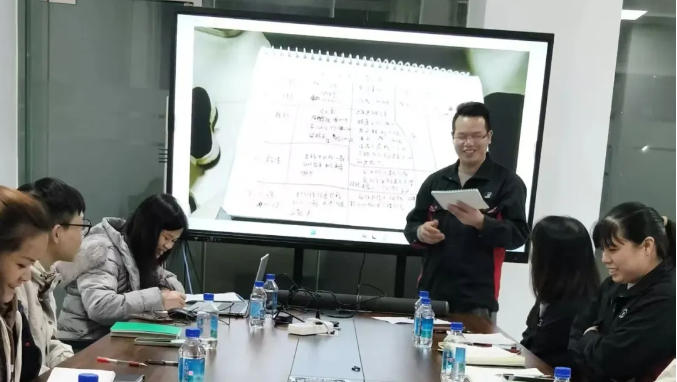
Huang Yongxiong from the Plane Department
Thank you to the company for providing us with this learning platform, and also thank you to Teacher Zhao for his patient guidance and feedback. After four months of hard work, I finally completed all the courses. Learning is just a process, the most important thing is that we will apply what we have learned to practical work. We will not disappoint the company's cultivation of us.
There are 16 classes in this learning session, and the content of each class is related. First, go from simple to detailed, and then from detailed to global. This is a management system that considers the overall situation. From how the team communicates, clear communication language and friendly attitude reflect the importance of communication. Only with good communication can things proceed smoothly.
Through this training, I have deeply felt the importance and challenges of on-site management, which not only requires managers to possess rich professional knowledge and practical experience. It also requires the ability to adapt flexibly and have innovative thinking. At the same time, I have come to understand that as a manager, it is important to constantly monitor the needs and changes of employees. Strive to create a positive, healthy, and upward working environment for them. In my future work, I will apply what I have learned from this training to practical work. Continuously improve one's on-site management ability and level. At the same time, I also hope to have the opportunity to participate in similar training and learning activities again, constantly updating my knowledge and concepts, and contributing my strength to the sustainable development of the enterprise.
In the past, I had many shortcomings and was eager to handle tasks assigned by my leaders. The handling of affairs is not efficient enough, the thinking is not comprehensive enough, and not profound enough. Not proactive and proactive enough in handling work. Often waiting for the leader's instructions, taking one step at a time. Although able to basically complete the tasks assigned by superiors, I feel powerless and lack work motivation when facing difficulties and pressure in my work. After this training, absorb new knowledge and concepts. Improve one's standards for daily work, enhance innovation awareness, and have the courage to face challenging tasks.
During the training, I learned many practical on-site management skills. For example, how to establish trust through effective communication and encourage employees to actively participate in work, how to use incentive mechanisms to enable employees to feel a sense of achievement and self-worth while completing tasks, and how to create a good team atmosphere and foster a mutually supportive and cooperative relationship among employees. Managers should flexibly adjust management strategies based on the actual situation and needs of employees. For employees with different abilities and attitudes, different leadership styles should be adopted to achieve the best management results. This made me realize that on-site management is not static, but requires constant observation and adjustment to adapt to the changes and needs of employees. In addition, I also learned how to use digital tools to improve the efficiency and problem-solving of on-site management, in order to develop targeted improvement measures, or to ensure the stability and safety of the production process through real-time monitoring. The application of these digital tools not only improves the accuracy and efficiency of on-site management, but also allows employees to have a clearer understanding of their work performance and contributions.
For future planning, we must adhere to two key words With respect in the heart and responsibility in action, perseverance is not about standing still, but about three things at all times: first, always carrying the "responsibility" on our shoulders. In every task, we should do what needs to be done well and shoulder the responsibility that needs to be carried. This is a reverence for our work and also a responsibility for ourselves. Second, we should always keep "learning" in mind. The industry is developing and knowledge is updating, so we need to constantly learn new knowledge and create new thinking. Only then can we keep up with the pace of the team. Third, we should always grasp the "details" in our hands. As producers, we should strive to the extreme in every process to make our work results more reliable. More able to withstand scrutiny.
Next, I will focus on my thoughts, studies, work, and life, and work diligently in all aspects of my work, striving to reach new heights in personal growth and overall performance.
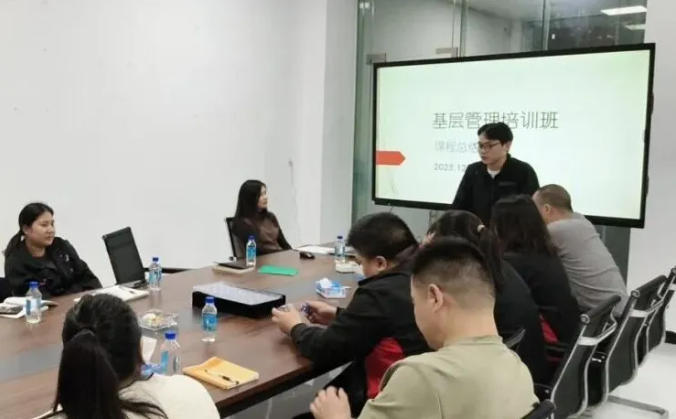
Screen Printing Department Jiang Li
1、 Learned: Systematic knowledge system construction
1. Deepen the understanding of the seven major wastes in lean production
Through learning, I have gained a profound understanding of the essence of the seven major wastes: overproduction, waiting, transportation, overprocessing, inventory, action, and defects. In the past, in my work, I often only focused on obvious material waste. Now, I have learned to identify implicit process waste and time waste, especially the two easily overlooked forms of waste: "waiting" and "excessive processing".
2. Improvement of the application ability of IE's seven major techniques
The IE techniques of time study, action analysis, and process analysis have enabled me to master scientific efficiency improvement tools. I have initially learned to analyze the workflow through the "Five Five Method" questioning technique and optimize equipment utilization through "human-machine cooperation analysis". These methods are more systematic and sustainable than relying on experience to improve in the past.
3. The practical value of improving production efficiency with the "three board axe"
The three axes of standardization, visualization, and continuous improvement may seem simple, but they contain profound management wisdom. I realize that without standardization, there can be no improvement, and without visualization, problems cannot be identified. These three factors form a spiral improvement cycle.
4. Consolidate the foundation of safety management and on-site management
The three-level safety education system for new employees has helped me understand the hierarchical responsibilities of safety management; 5S management not only taught me the methods of organization and reorganization, but also made me realize the long-term and important formation of "literacy", which is the cultural foundation for continuous improvement.
5. Internalization of self-improvement tools for managers
The five mirrors of telescope, microscope, magnifying glass, rearview mirror, and flat mirror provide a complete framework for managers to reflect on themselves. I particularly appreciate the importance of a microscope - only by delving into details can we discover real problems.
2、 Self reflection: Comparison between Past and Present
Past limitations:
1. Superficial problem identification: In the past, when faced with low efficiency, it was often attributed to employees' lack of effort or outdated equipment, lacking systematic analysis
2. Fragmentation of improvement measures: The measures taken are mostly single point breakthroughs, lacking a holistic process perspective
3. Experiential management thinking: overly reliant on personal experience, lacking support from scientific tools and methodologies
4. One sidedness of safety awareness: understanding safety simply as "no accidents" neglects the cultivation of safety culture
Current progress:
1. Preliminary formation of systematic thinking: able to examine the entire value stream from a waste perspective, rather than isolated links
2. More diverse toolbox: Mastered structured tools such as seven waste identification methods and IE analysis techniques
3. Improve multidimensional perspective: Learn to think about problems from multiple dimensions including safety, quality, efficiency, and cost simultaneously
4. Increased awareness of prevention: Understanding that 5S and standardization are the foundation of problem prevention, rather than just superficial efforts
3、 The Future Path: A New Direction for Career Development
Short term direction (within 1 year):
1. Practical transformation: Apply learned tools in existing positions and complete at least 3 lean improvement projects
2. Skill Enhancement: Conduct in-depth research on Value Stream Mapping (VSM) drawing and analysis, and master more advanced lean tools
3. Knowledge sharing: Share what you have learned within the department and cultivate 2-3 colleagues to master basic IE techniques
Mid term direction (1 year):
1. System construction: Promote the establishment of a complete waste identification and improvement mechanism within the team or department
4、 Farewell to the Old and Welcome to the New Year: New Year's Work Plan
1. First quarter: Foundation consolidation
Complete the 5S standardization of personal work areas and pass the acceptance inspection
Using action analysis techniques, optimize a daily workflow and achieve a target efficiency improvement of 15%
Establish a personal waste observation log and identify at least 3 waste points per week
2. Second quarter: Project Practice
Lead or participate in a project that can improve, applying the seven major techniques of IE
II. Establish a "Visual Management" Kanban system for the team
Conduct a team level safety observation activity using five mirror tools
3. Third quarter: Deepening and expanding
Attempt to draw a value stream diagram of a core process and identify opportunities for improvement
Train a new employee to work as a Lean Improvement Assistant
Summarize the improvement achievements of the first half of the year and form a case library
4. Fourth quarter: System establishment
Promote the establishment of a continuous improvement mechanism for the team (such as an improvement proposal system)
II. Complete personal annual improvement achievement report
Develop a personal lean capability development plan for the next year
This training was like opening a door to management science for me. In the past, I used to do things, but now I have learned how to do things scientifically; In the past, I focused on 'results', but now I place greater emphasis on the' process of producing results'. Lean is not only a set of tools, but also a way of thinking and culture.
In the new year, I will take "eliminating waste and creating value" as the core, transform the knowledge I have learned into practical actions, start from small improvements, accumulate small gains, not only enhance personal value, but also contribute to the development of the organization. On the occasion of bidding farewell to the old and welcoming the new, I look forward to moving from "knowing" to "doing", and ultimately achieving the lean state of "continuously doing well".




Tel
Mobile phone
Customer service
TOP